
Render Maintenance: How to Keep Your Walls Looking Good for Years
The good news about modern silicone and monocouche render is that it genuinely needs very little looking after. The better news is that the small amount of maintenance it does need is straightforward — and knowing what not to do is just as important as knowing what to do.
Why maintenance matters at all
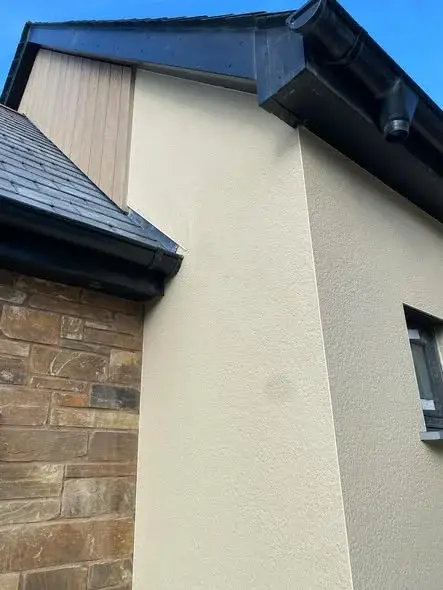
Modern render systems are engineered for longevity. A properly applied silicone render in the right conditions should last well over twenty years without any intervention. But “no intervention” doesn't mean no attention. Small problems — a hairline crack that lets water in, algae building up in a sheltered north-facing corner — are much cheaper and easier to deal with early. Left alone in Cornwall's wet climate, they can become bigger problems.
The majority of render jobs we've seen fail prematurely failed for one of two reasons: either the original installation had problems (wrong system, poor prep, inadequate primer), or early warning signs were ignored. If the installation was right, a basic maintenance routine — really just a periodic clean and an annual look over — is all that's needed to keep a wall looking right for decades.
The annual visual check
Once a year — we'd suggest late spring when the worst of the Cornish winter weather is done — walk around the building and look at the render properly. You're looking for four things. First, cracks: particularly around window and door reveals, where the render meets different materials, and at corners. Hairline cracks up to about 0.3mm are normal in monocouche and can be colour-matched and filled before they widen. Cracks wider than that, or cracks that are stepping or following a pattern, need a closer look.
Second, look for any hollow or drumming areas — tap the surface gently with your knuckle. A solid render sounds dead; a delaminating section sounds hollow. Hollow spots mean the render has lost its bond to the background, and once water gets behind a delaminated section it accelerates the failure quickly. Third, check the bottom edge of the render and any sills or heads for staining — brown water marks running down from a sill usually mean the sill is unsealed or cracked and water is channelling behind. Fourth, in north-facing or sheltered spots, look for green algae or grey lichen starting to take hold.
Soft washing: when and how
For most Cornish properties — which is to say properties in a damp, maritime climate with plenty of airborne spores — we'd recommend a soft wash every five to seven years. A soft wash uses a diluted biocidal detergent applied at very low pressure. The chemical does the work: it kills organic growth, loosens dirt, and rinses off without disturbing the render surface. The wall is treated, left for a dwell time, then gently rinsed clean.
What you must not do is pressure wash render. We know it's tempting — the results look dramatic and immediate — but a pressure washer strips the hydrophobic coating from silicone render and can blast monocouche clean off the wall if there's any delamination underneath. Once that protective coating is damaged, the render loses its self-cleaning properties and algae comes back faster than ever. The money you saved on a soft wash company gets spent on a full re-render much sooner than it should.
Dealing with algae and lichen
Algae is common on north-facing elevations, in sheltered spots where the render stays damp, and on any render that's lost some of its hydrophobic performance. Green algae (the bright green or yellow-green growth) is relatively recent colonisation and responds well to a soft wash treatment. Grey-black algae is more established and takes longer. Lichen — the circular, crusty patches — is the toughest customer; it can take two treatments with a longer dwell time, and some older lichen growth leaves a faint ghost mark even after it's dead and rinsed off.
After a soft wash, you can apply a render sealant or biocide barrier coat to the cleaned surface. This extends the time before the next treatment is needed — particularly useful on north elevations where the render never fully dries out through the winter. It's not essential, but on a property in a wooded or sheltered site it's usually worth doing.
Monitoring cracks
Not all cracks are created equal. Hairline cracks in monocouche — particularly around movement joints or where the render meets a window frame — are common and don't necessarily indicate a structural problem. In most cases they can be colour-matched with a flexible filler and a tinted topcoat and the repair is almost invisible. Catching them early, before water has been cycling through them over a winter, means the repair is simple and the surrounding render is unaffected.
Silicone render is inherently more crack-resistant because of its flexibility, but it's not immune — particularly at junctions with rigid materials. If you find a crack in silicone render, prod it gently to see if there's any give behind it. A crack with a solid background is a surface issue. A crack where the render moves when you press it means there's a delamination, and that needs a professional look. Mark any cracks you find with a pencil note of the date — if the crack grows over the following months, you've got movement, and that changes how it needs to be dealt with.
When to call a professional
Call me, or another qualified tradesman, if you find any of the following: cracks wider than about 1mm; hollow or drumming sections; render that's cracked and detached at a corner or around a window reveal; staining that looks like it might be water ingress from behind the render rather than surface dirt; or any area where the render is physically falling away. These are all situations where DIY repairs risk making things worse by sealing over a problem that needs proper investigation first.
Also call if you're seeing persistent damp on internal walls directly behind an external rendered elevation. Render can mask the source of water ingress, and a professional eye on the outside of the building is often quicker and cheaper than pulling apart internal finishes trying to find the source.
The long view
A good render job, properly maintained, should outlast most of the other building fabric it's protecting. The maintenance commitment is genuinely minimal — an annual look, a soft wash every few years, and dealing with small cracks before they grow. That's it. The render jobs that fail at ten years rather than twenty-five almost always had a problem that was visible much earlier and wasn't dealt with.
If you're not sure about the condition of your render — particularly if it's more than ten years old or you've just bought the property and don't know the history — give us a call and we'll have a look. Most of the time we can tell you it's fine, which costs you nothing. Occasionally we'll find something worth sorting while it's still a small job.
Got a job in mind?
Call us on 07761 735022 or message on WhatsApp. Free quotes, no pressure.